The cheap megawatt in the middle of nowhere gets expensive the first time a chiller trips at 2 a.m. and your nearest qualified tech is 90 minutes away.
Metro sites start with a bench. Remote sites start with a recruiting plan.
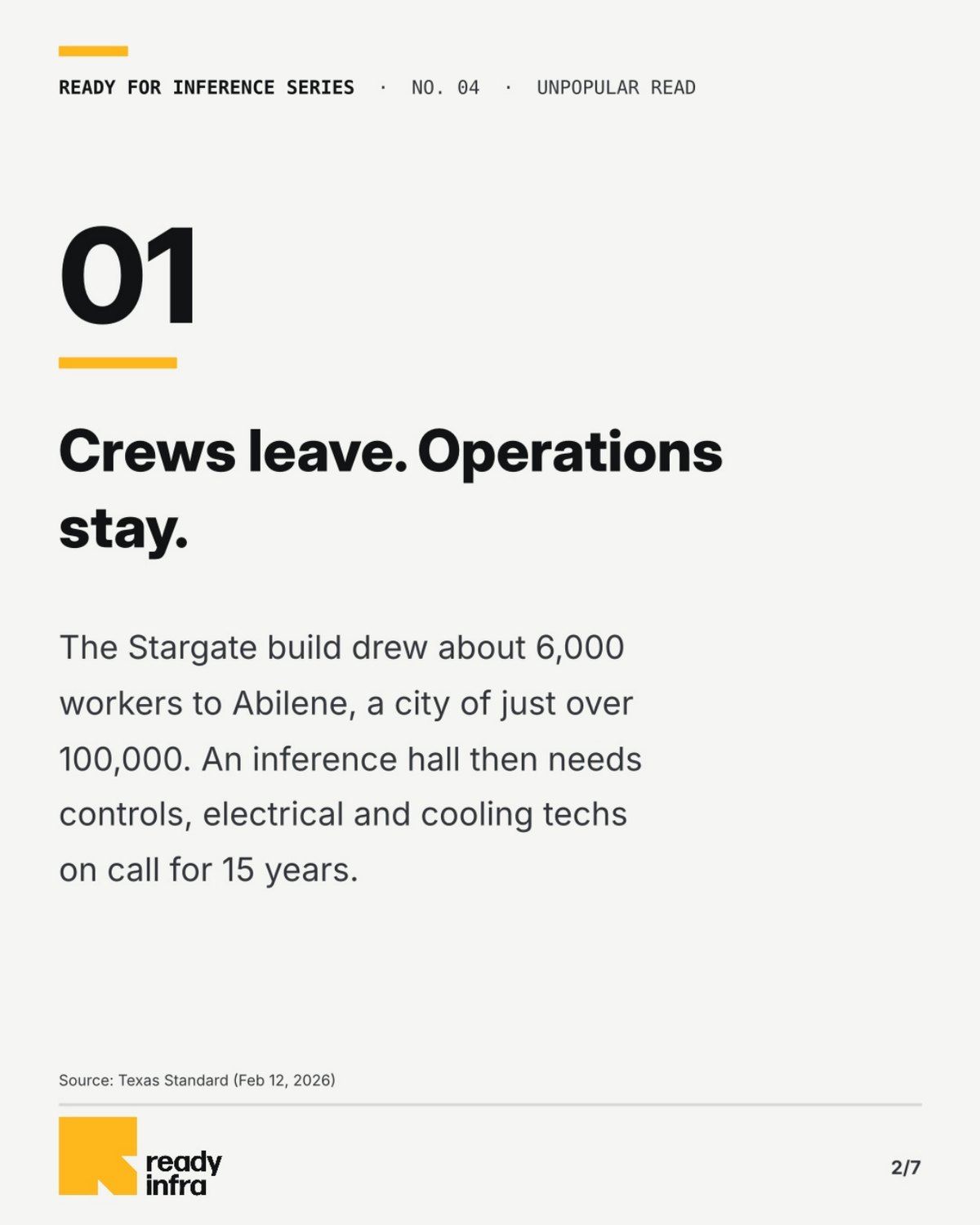
About 6,000 workers came to Abilene for the Stargate build, in a city of just over 100,000 where rents have surged, per Texas Standard.
Construction crews leave. Operations don't.
An inference hall needs controls, electrical and cooling techs on call for 15 years. A remote campus has to recruit, house and keep them. A metro building hires from a deep local bench.
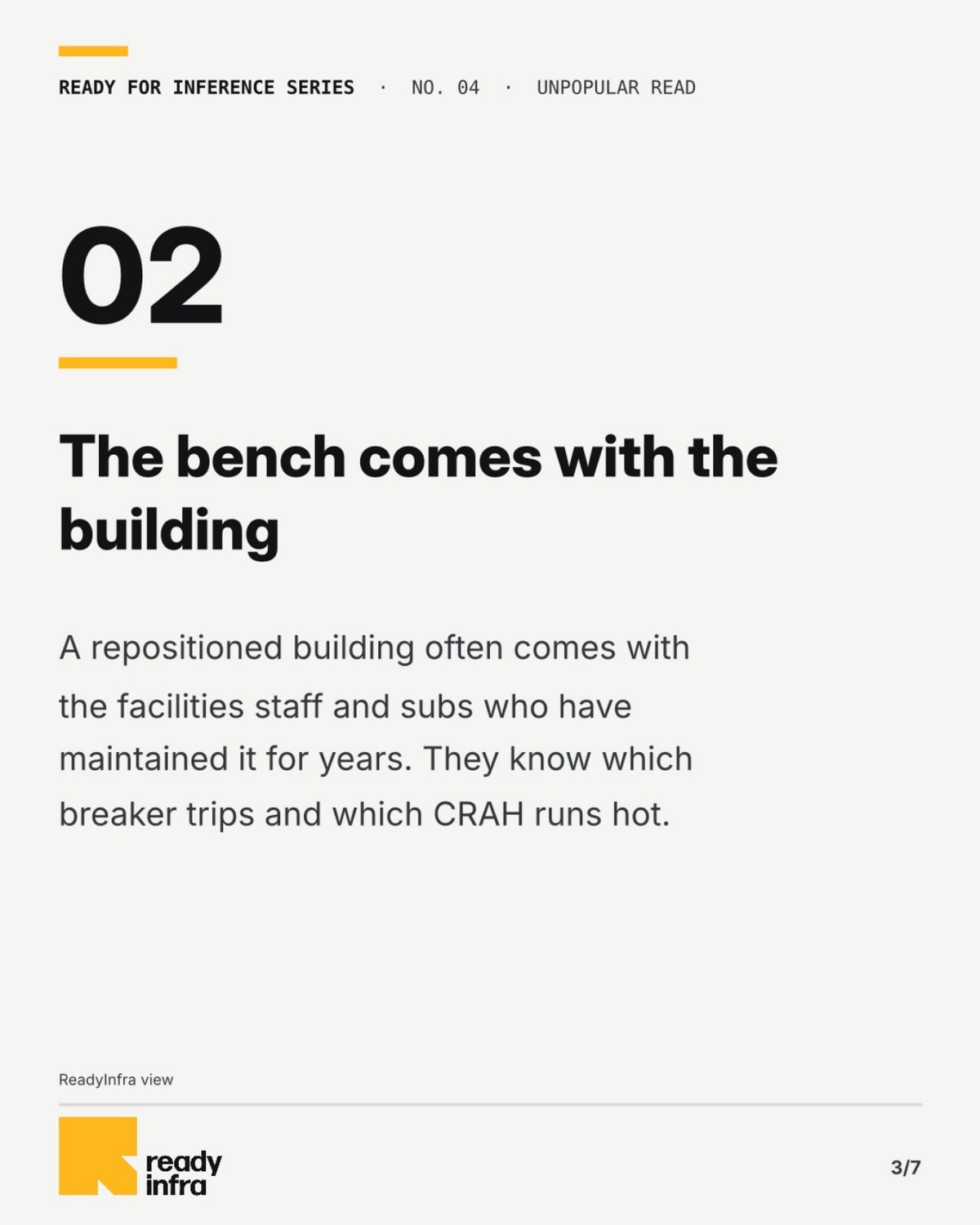
A repositioned building often comes with that bench in place: the facilities staff and the electrical and mechanical subs who have maintained it for years. They know which breaker trips and which CRAH runs hot.
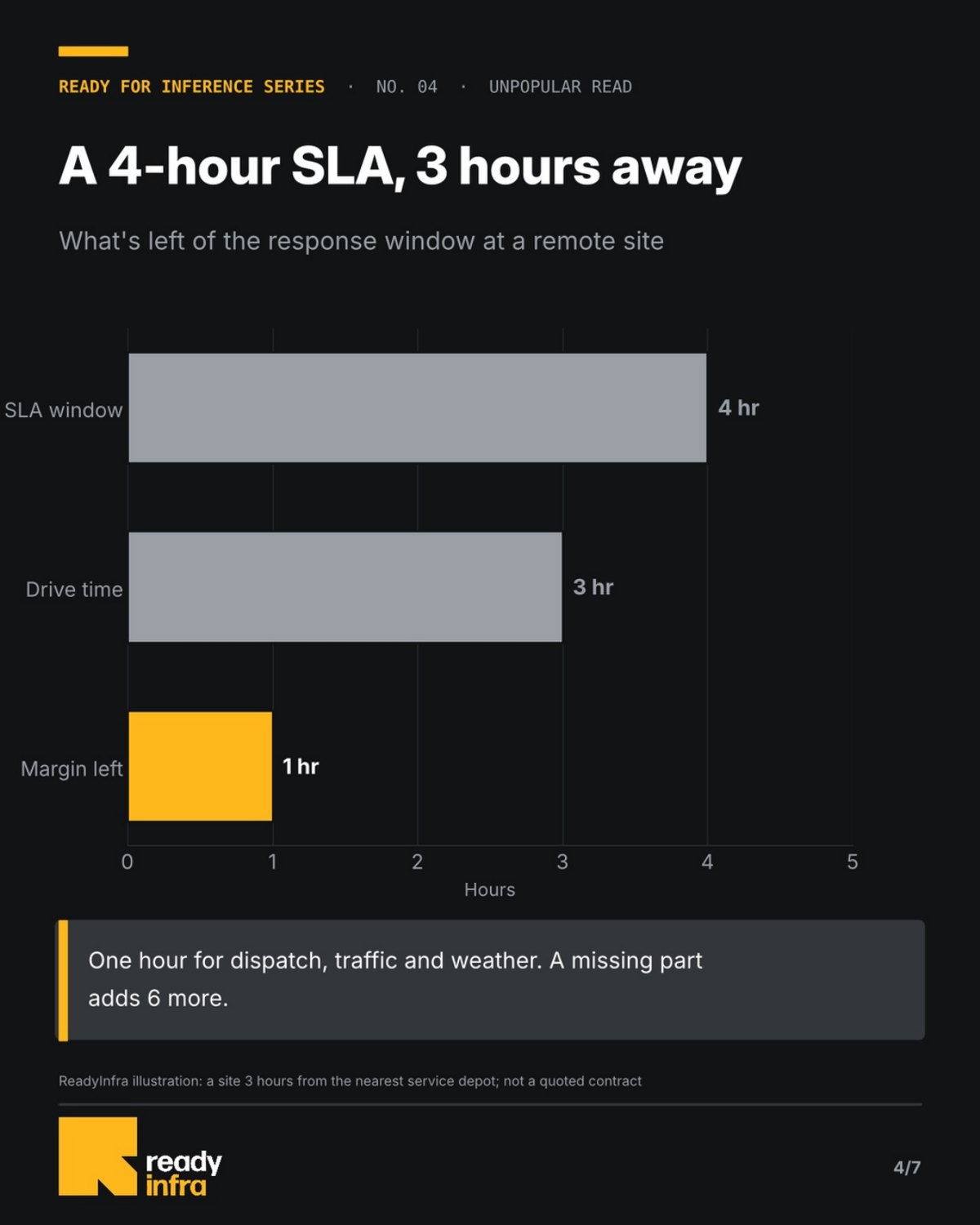
Then the service contract. Try getting a 4-hour on-site SLA for UPS, switchgear and chillers at a site three hours from the nearest service depot:
- A 3-hour drive leaves 1 hour for dispatch, traffic and weather
- A part not on the truck means another 6-hour round trip
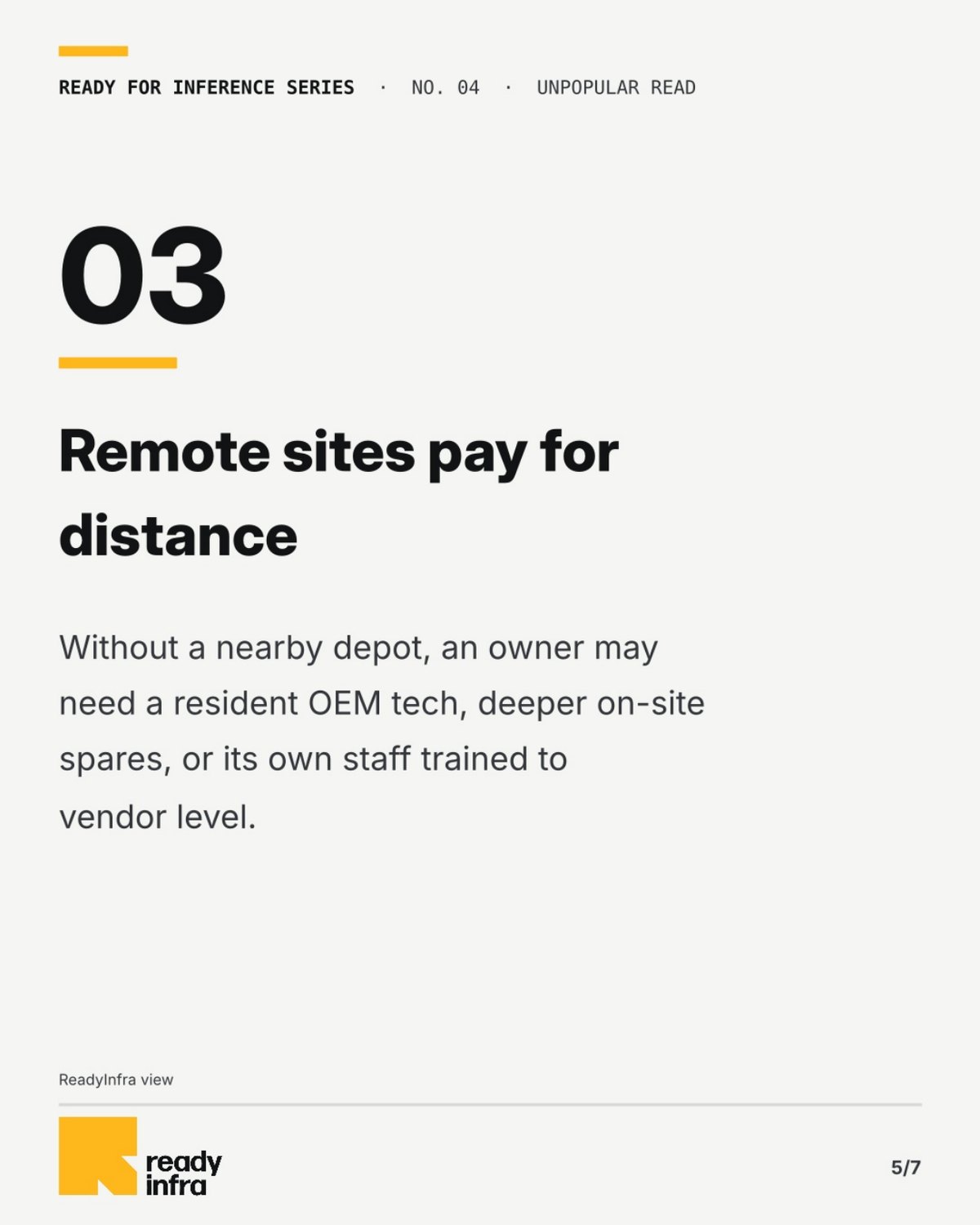
That pushes a remote owner toward options a metro site may not need: a resident OEM tech, deeper on-site spares, or its own staff trained to vendor level.
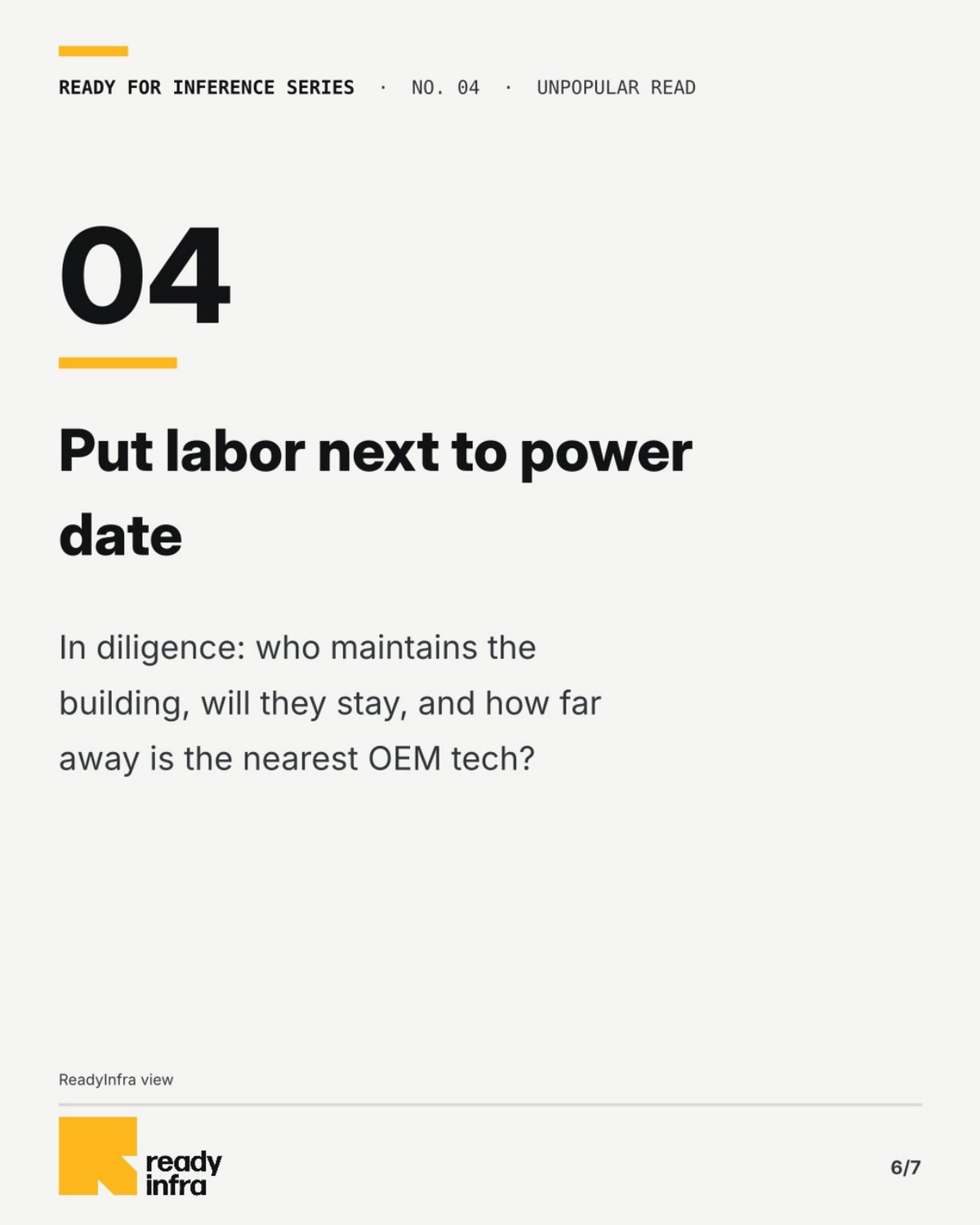
For 5–50 MW metro sites, labor sits next to power date in diligence: who maintains the building, will they stay, and how far away is the nearest OEM tech?
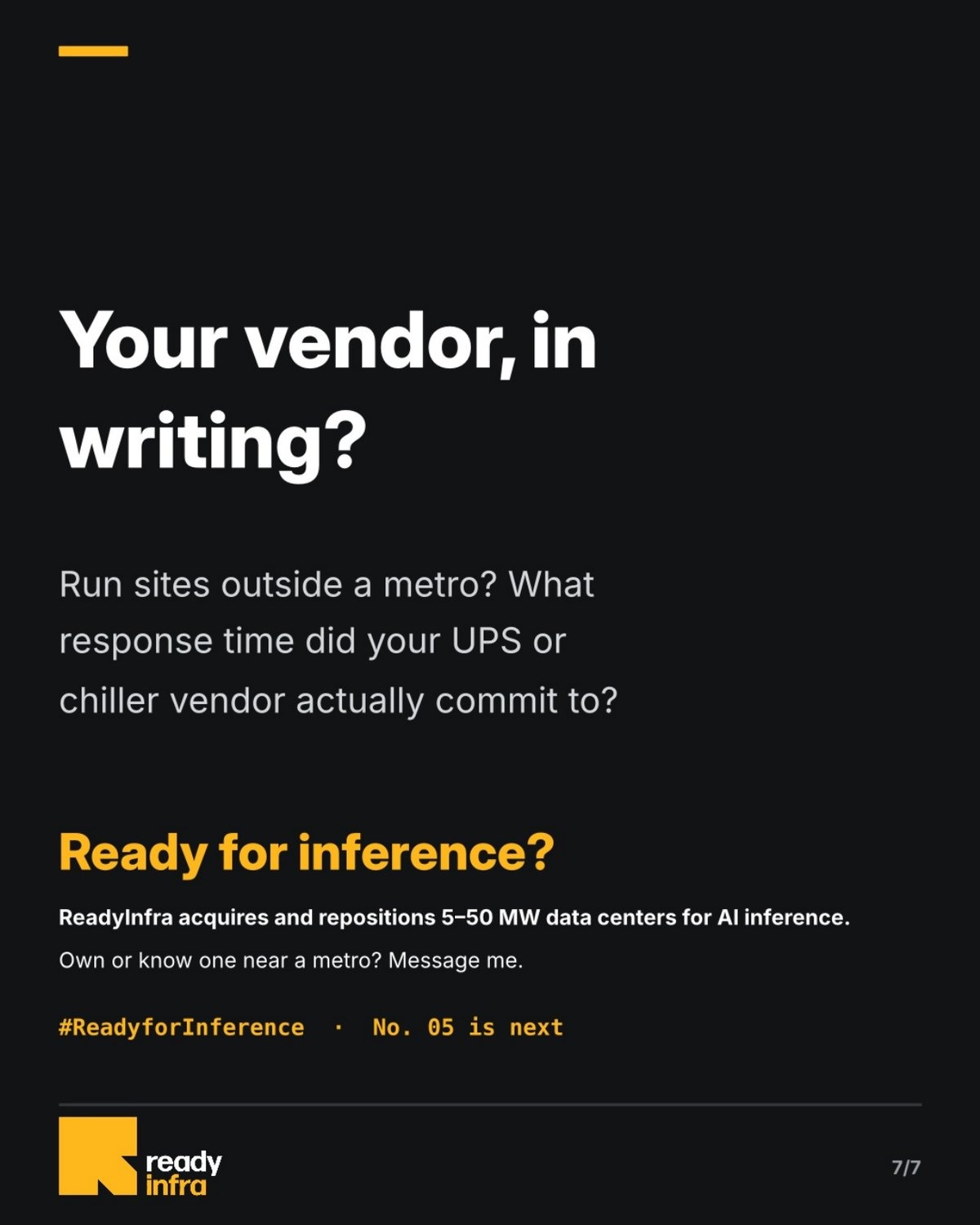
If you run sites outside a metro, what response time did your UPS or chiller vendor actually commit to in writing?
The conversation on this one is happening on LinkedIn.
Join the discussion →