Edge Data Center Development

Latency-bound inference runs where the users are

ReadyInfra develops mid-scale data centers at the metro edge, for inference that has to sit near users rather than wherever power is cheapest. Sites selected against measured fiber and a verified power path, and operated by the team that builds them.
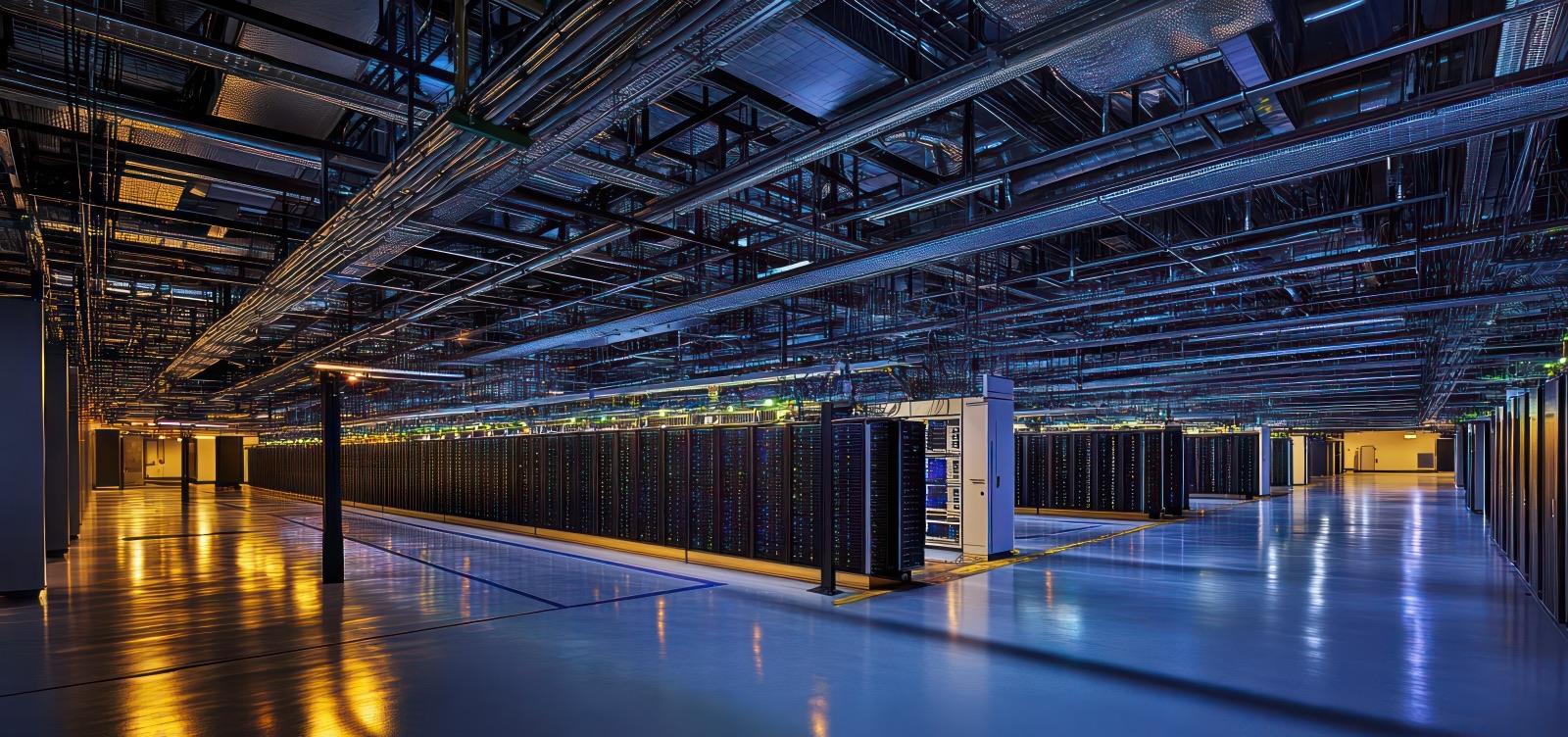
Data center infrastructure and operations facility
Metro-Edge Inference Nodes
5 → 50 MW

Metro-Edge Inference Nodes
5 to 50 MW
Measured Fiber Siting
Brownfield Redevelopment
Modular Build Delivery
Acquisition Due Diligence
Operational Readiness
Published Site Labels
Metro-Edge Inference Nodes
5 to 50 MW
Measured Fiber Siting
Brownfield Redevelopment
Modular Build Delivery
Acquisition Due Diligence
Operational Readiness
Published Site Labels

The demand is here today. The power is five years out.

Capital and demand are both available. What the market cannot buy is time—and that constraint is what a development platform has to be engineered around.

1%
Vacancy across North American data centers, for a third straight year.
5 years
Median wait from a US grid interconnection request to live power.
$49.7B
Spent on US data center construction in 2025, up 43 percent on the prior year.

Vacancy: JLL, North America Data Center Report, Midyear 2026. Interconnection wait: Lawrence Berkeley National Laboratory, Queued Up, 2026. Construction spending: US Census Bureau, Value of Construction Put in Place, revised series, August 2026.

Inference lives at the edge

Training can run anywhere power is cheap. Inference cannot—it answers a user in milliseconds, so the compute has to sit close to that user.

Location

Sites selected on measured fiber routes to the carrier hotels and exchanges that actually serve the metro, not straight-line distance on a map.

Latency

Every inference query is answered in milliseconds. Distance is not a tuning parameter—it is a hard limit on what a site can serve.

Scale

Multiple nodes per metro edge let a tenant expand inside the same latency zone instead of moving to a different market.

5–50 MW
Target range per node

We build mid-scale inference nodes, with 5 to 50 MW as the optimal range rather than a fixed limit. The size is set by the latency envelope and the tenant profile, not by the economics of a hyperscale training campus.

Almost every campus built to date was designed for training. A data center takes years to deliver, so building inference capacity now means building ahead of the demand it will serve.

The fastest megawatt is the one already there

Abandoned and underused industrial facilities already carry the service, the gas, and the utility account. Bringing one back skips the longest queue in the industry.

Time to power
Grid request to live power, US median
5 years
Industrial site with service already in place
Months

A shorter entitlement path

Industrial use is already established on the parcel, so no farmland is converted and no residential neighborhood is rezoned.

Service already in place

An existing utility account changes the question from “when can we get power” to “how much headroom is there, and what does more cost.”

A liability becomes an anchor

Cleaned-up brownfields returned $29–97 million in local tax revenue across 48 sites in one year, per EPA studies. Towns treat that differently.

Queue wait: Lawrence Berkeley National Laboratory, Queued Up, 2026. Tax revenue: EPA Brownfields Program studies. Timelines vary by site and utility; allocated power remains subject to utility confirmation.

From first parcel screen to live compute

One team carries the project end to end. The group that underwrites the site is the group that operates it, which is what keeps the underwriting honest.

01

Site and power

Powered land close to the market it serves, screened on measured fiber distance, existing utility service, substation headroom, water, zoning, and environmental condition.

02

Entitlements

Zoning, permitting, and utility or generation agreements carried in-house, alongside the community engagement that determines whether a project gets built at all.

03

Build

Modular halls fabricated off site and phased in with demand. Footprint, cost, and schedule are known from the day the data room opens.

04

Compute

Rack-ready colocation for tenant hardware, with the density and power envelope specified before procurement rather than discovered during commissioning.

05

Operate

We operate what we build, with readiness gates, turnover evidence, qualified staff, and OT governance in place before the first tenant load.

06

Repeat

One standard across sites means each project starts from the last one’s drawings, vendors, and procedures instead of from a blank page.

What we look for in a site

The parameters a parcel has to clear before it reaches underwriting.

5 to 50 MW as the target range per node, sized to the latency envelope and tenant profile rather than to a fixed limit
Inside the metro latency envelope, verified against measured fiber routes to the exchanges and carrier hotels that serve it
Brownfield and powered industrial sites preferred, where utility service is established and industrial use is already entitled
Grid supply or on-site generation, decided per site on lead time and delivered cost of power rather than by default
A host community we can commit to, where the published site label is an asset in the entitlement process rather than a liability

Two Managing Partners, forty years in the field

ReadyInfra is led by operators who have run mission-critical facilities and built data centers across several generations of compute.

CK Krishnan, Managing Partner at ReadyInfra

CK Krishnan

Managing Partner

20+ years in mission-critical operations, design, energy & sustainability — from Tier IV facilities to hyperscale campuses as EVP of Operations at CloudHQ. Prior leadership at Fidelity, Deutsche Bank, and JLL.

Nabeel Mahmood, Managing Partner at ReadyInfra

Nabeel Mahmood

Managing Partner

27+ years building data centers, from hyperscale campuses to emerging compute architecture. Board director, global keynote speaker, and co-founder of the Nomad Futurist Foundation.

The same discipline, on your side of the table

Developers, investors and lenders bring us in for two questions we answer on our own projects every day: what an asset actually costs to run after close, and whether operations will be ready when the keys change hands.

Explore advisory →

Ready for Inference

All insights →
No. 03 · The Ready List

Under 50 MW isn't a free pass: 12 power questions

PJM and NERC propose large-load rules starting at 50 MW; Dominion's GS-5 starts at 25 MW. Below a cutoff those obligations don't apply — but the site still has to check out. The 12 questions we ask first.

October 7, 2026 · 6 min · CK Krishnan

Let’s talk about where you are building

Whether you are placing capital into edge infrastructure, bringing a powered site to the right developer, or need independent diligence on an asset under contract—start a conversation.