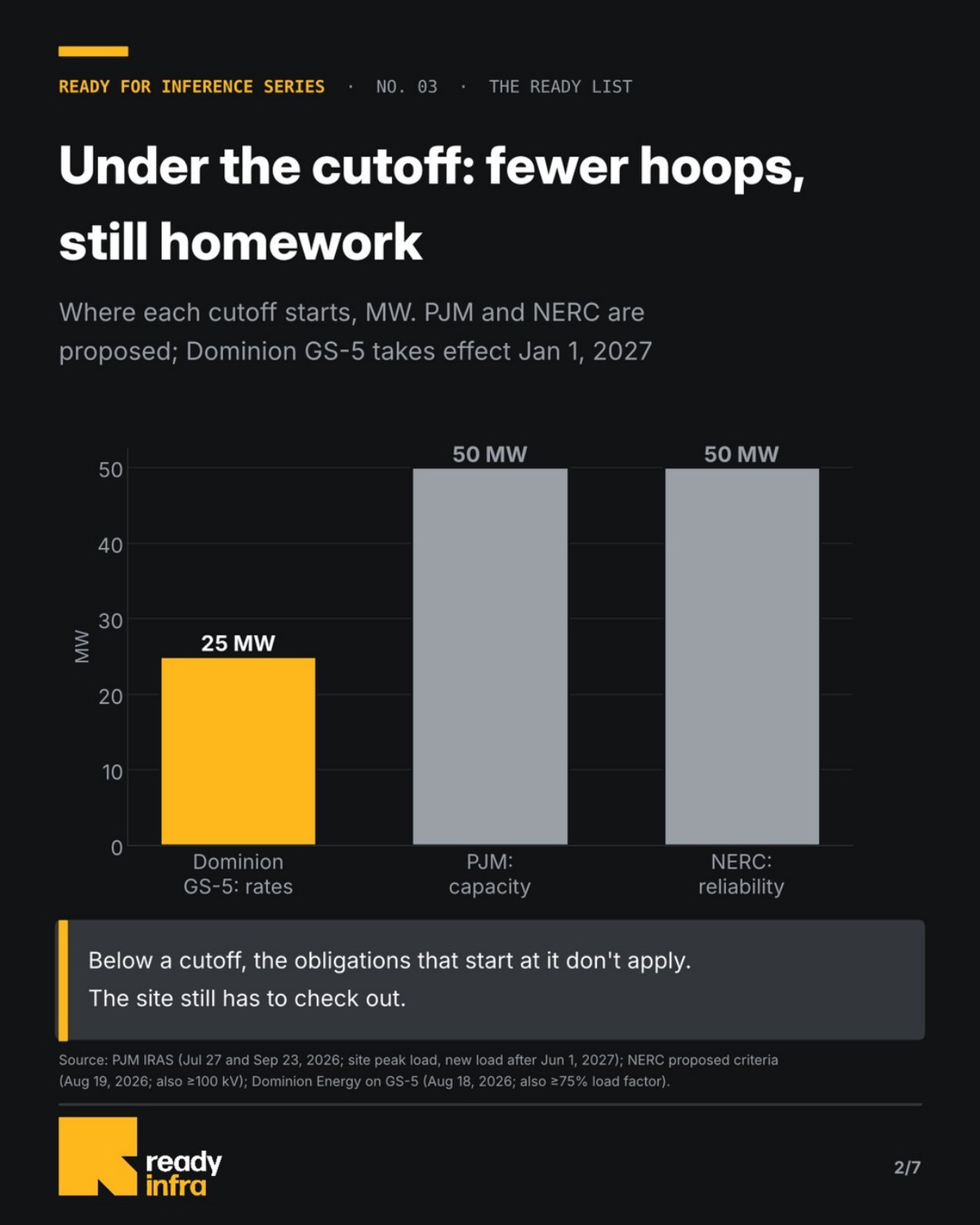
50 MW. That's where PJM's and NERC's proposed large-load rules start. Other utilities draw their own lines; Dominion's is 25 MW. Staying under your utility's cutoff means fewer hoops. It doesn't mean no homework.
The cutoffs, and what each brings:
- PJM (proposed, pending at FERC): 50 MW of peak load per site, for new load after June 1, 2027. Capacity and curtailment rules.
- NERC (proposed, due at FERC by Dec 31): 50 MW at 100 kV or above. Reliability registration.
- Dominion GS-5 (approved in 2025, effective Jan 1, 2027): 25 MW at a 75%+ load factor. 14-year terms and minimum charges.
Below a cutoff, the obligations that start at it don't apply. That's real value, and at ReadyInfra we've seen smart owners stay below their utility's cutoff for exactly that reason.
Recent example: Blackstart Digital agreed to buy IBM's former Almaden campus in San Jose, which it says runs on an on-site 25 MW substation. Energized infrastructure like that is the starting point.
The 12 power questions we ask before deciding
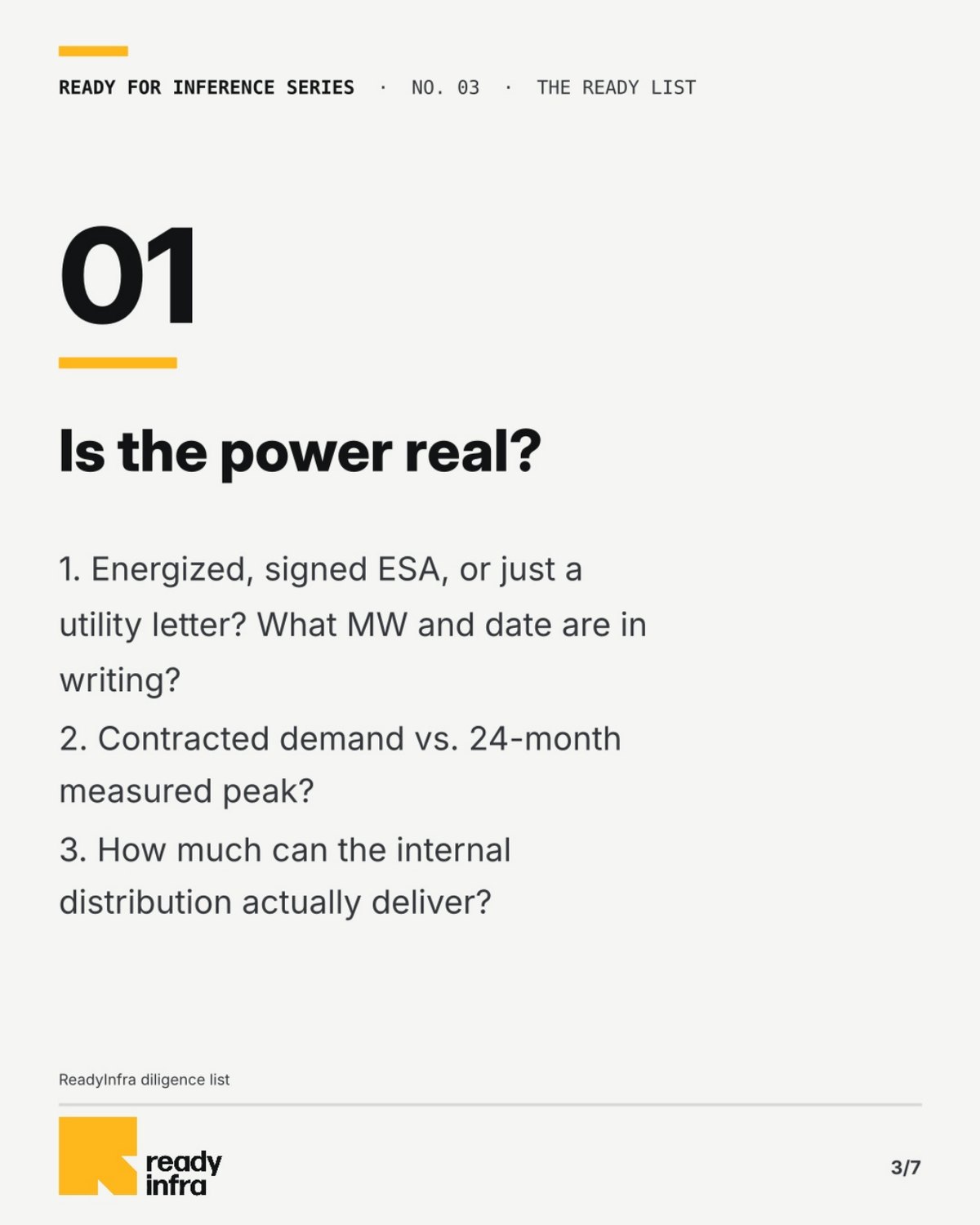
Is the power real?
- Energized, signed ESA, or just a utility letter? What MW and date are in writing?
- Contracted demand vs. 24-month measured peak?
- How much can the internal distribution actually deliver?
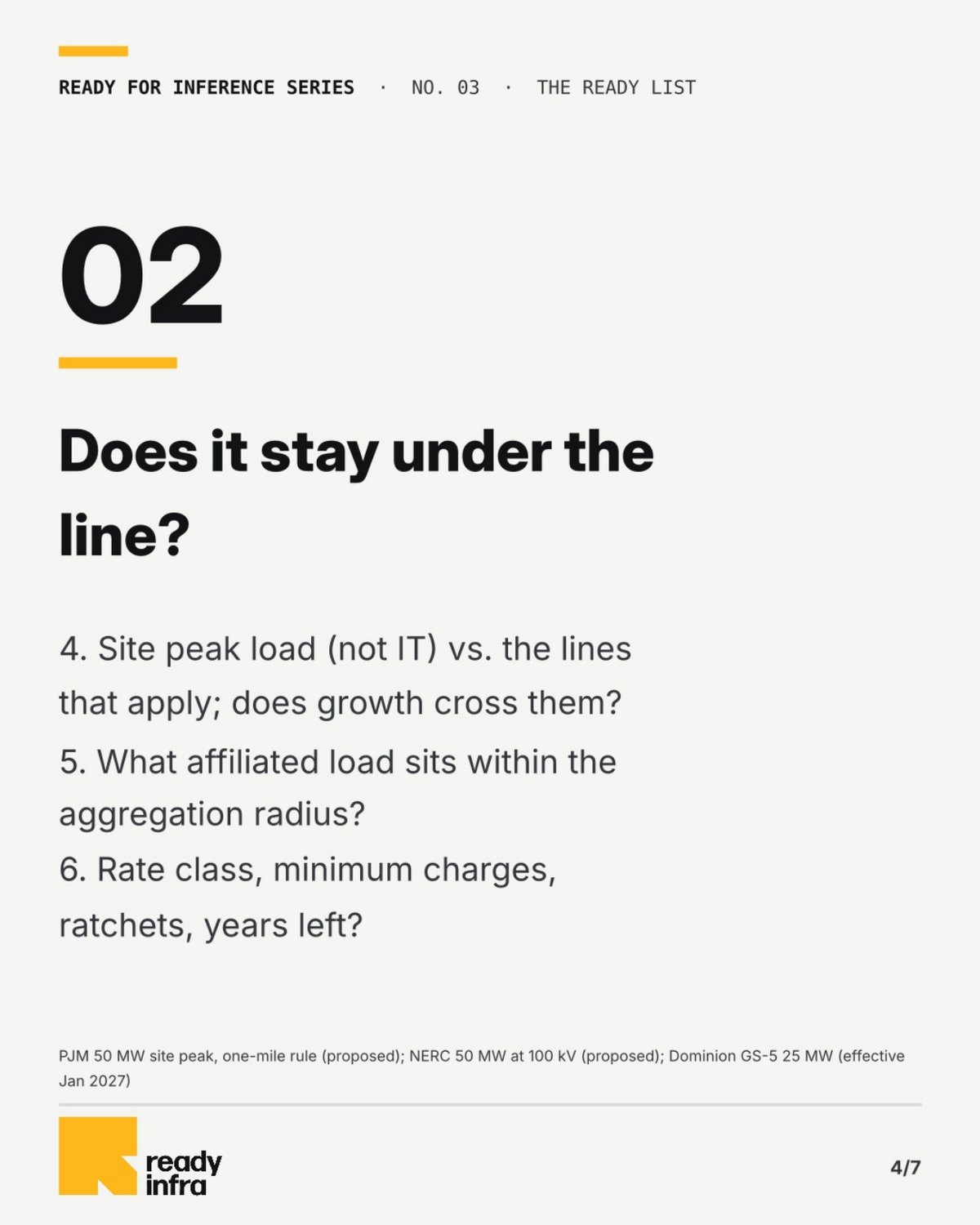
Does it stay under the line?
- Site peak load (not IT) vs. the lines that apply; does growth cross them?
- What affiliated load sits within the aggregation radius?
- Rate class, minimum charges, ratchets, years left?
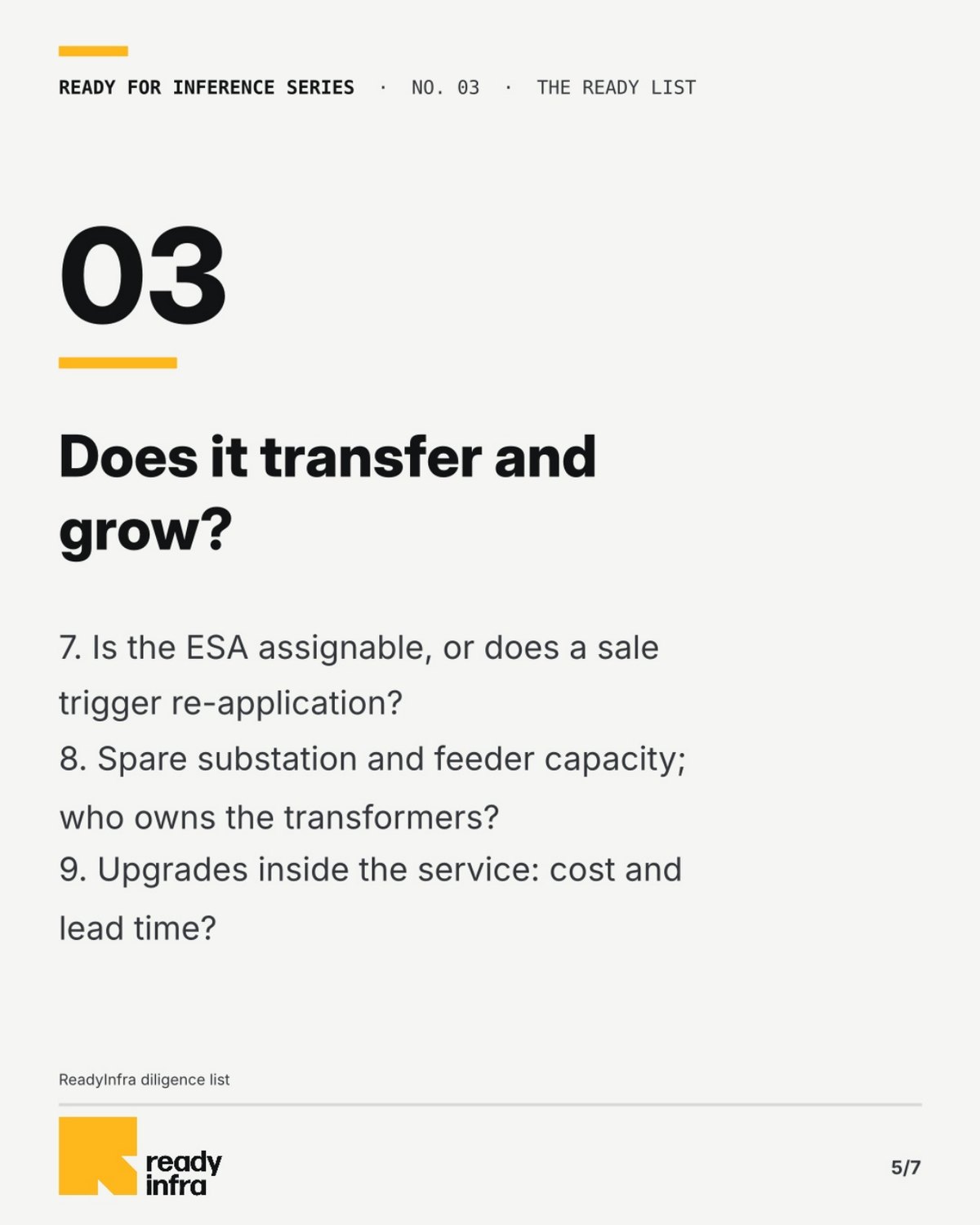
Does it transfer and grow?
- Is the ESA assignable, or does a sale trigger re-application?
- Spare substation and feeder capacity; who owns the transformers?
- Upgrades inside the service: cost and lead time?
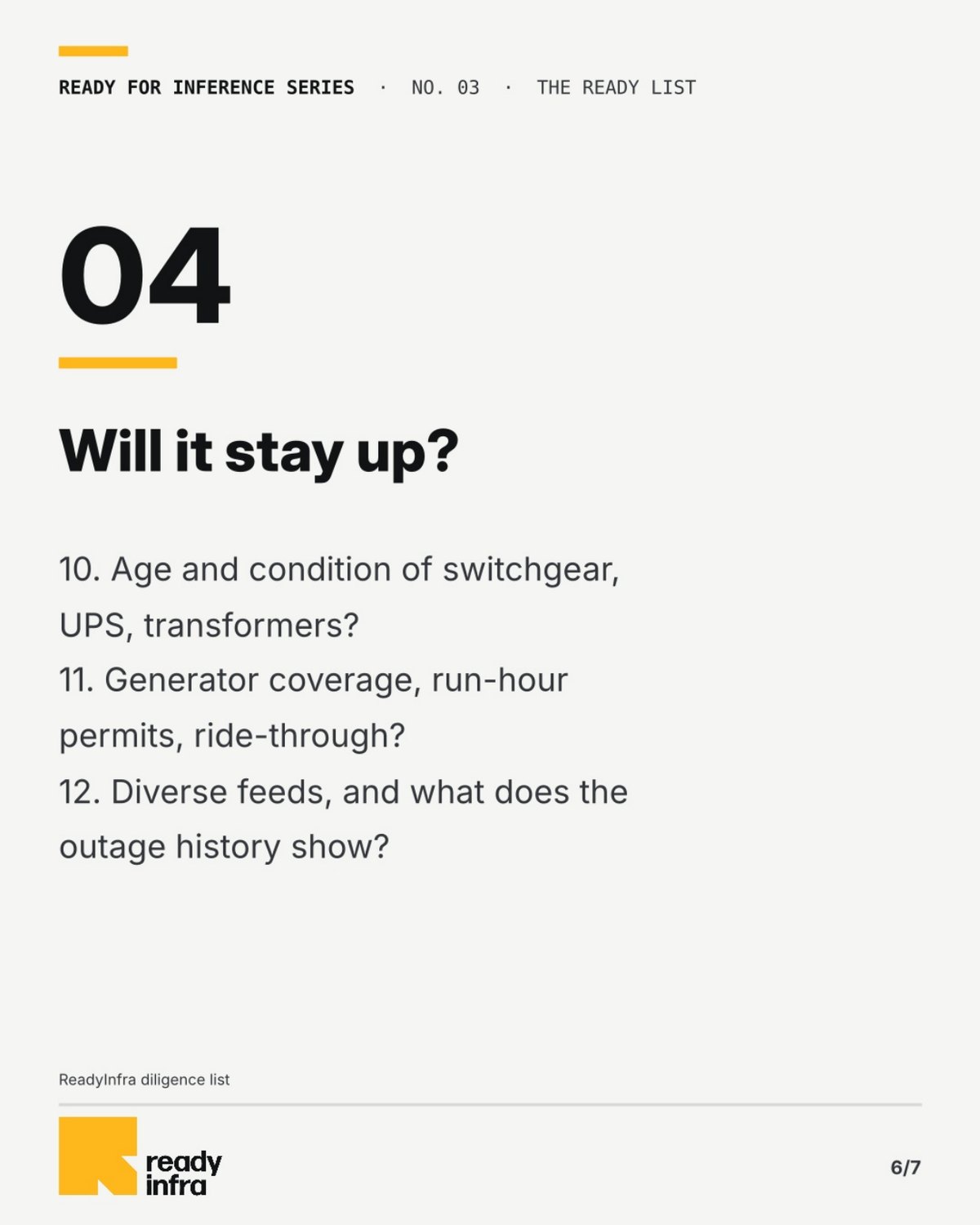
Will it stay up?
- Age and condition of switchgear, UPS, transformers?
- Generator coverage, run-hour permits, ride-through?
- Diverse feeds, and what does the outage history show?
Diligence teams: which of these trips up the deals you see most?
Sources
- PJM IRAS summary, Jul 27, and PJM answer in ER26-3515, Sep 23.
- NERC proposed registry criteria, Aug 19.
- Dominion Energy on GS-5, Aug 18. GS-5 was approved in the Virginia SCC's Nov 2025 order in Dominion's biennial review.
- Blackstart / IBM Almaden: The Real Deal and San José Spotlight.
The conversation on this one is happening on LinkedIn.
Join the discussion →